

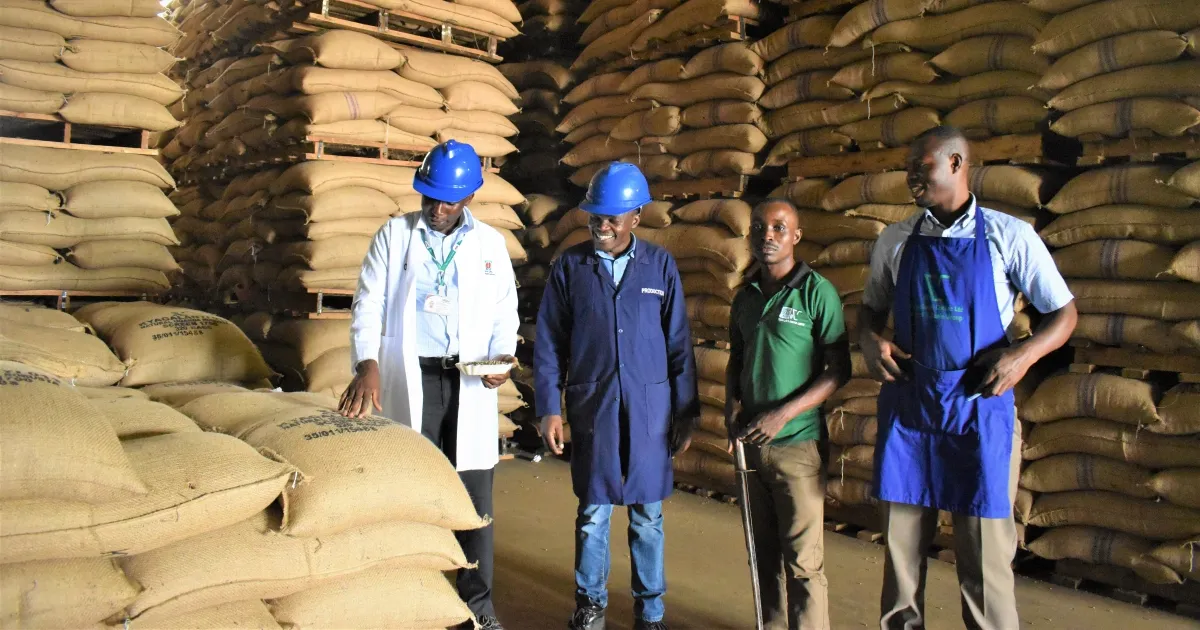
Coffee is one of the most important agricultural commodities in global trade, sustaining the livelihoods of millions of farmers across tropical regions. Among coffee‑producing countries, Uganda has gained remarkable prominence in recent years and has become one of the key players in the international market. A combination of favorable climatic conditions, strategic investments in the value chain, and significant export growth has brought unprecedented attention to Uganda’s role in the global coffee industry.
Uganda’s Position in Global Coffee Production
Uganda is one of Africa’s largest coffee producers and a leading supplier of Robusta coffee worldwide. The country consistently ranks among the world’s top ten coffee exporters and, after Ethiopia, is considered one of Africa’s most important suppliers to international markets.
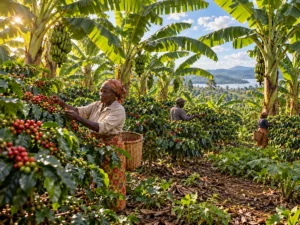
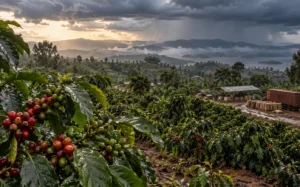
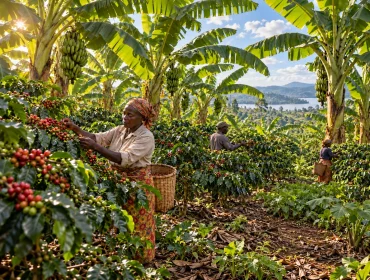
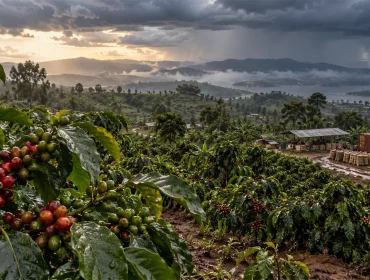
Approximately 80–85% of Uganda’s coffee production consists of Robusta, which naturally grows in the forested regions around Lake Victoria. Arabica coffee is cultivated in the highland areas of the east and west, particularly on the slopes of Mount Elgon and the Rwenzori Mountains. This climatic diversity enables Uganda to offer a wide range of flavor profiles to the global market.
Uganda’s Share in Global Coffee Trade
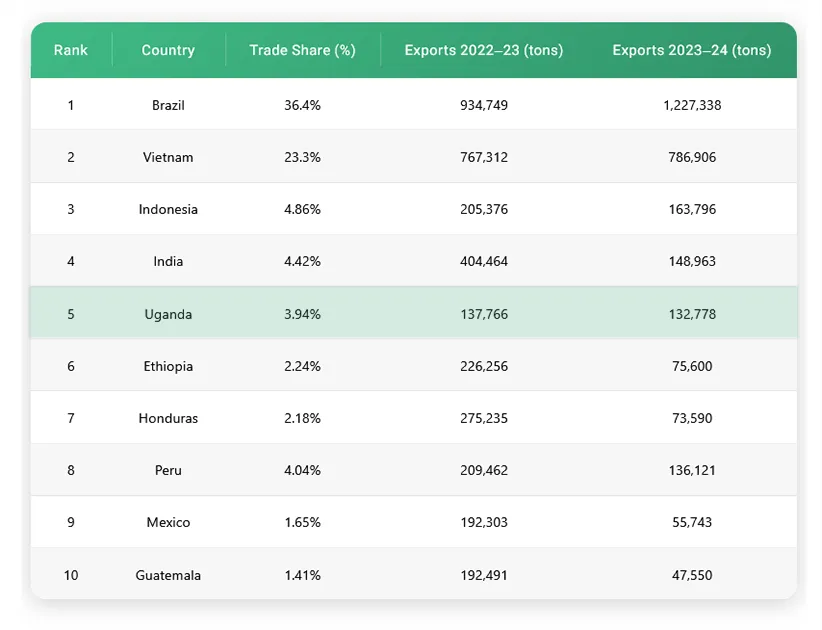
Coffee is Uganda’s most valuable agricultural export and represents a major source of foreign income. Uganda is currently ranked as the fifth-largest coffee exporter in the world. According to data from the International Coffee Organization (ICO), Uganda exported:
• 132,788 tons in 2023–24
• 137,600 tons in 2022–23
This gave the country 3.94% of the world’s total coffee exports.
Impressive Growth in Uganda’s Coffee Exports
Over the past decade, Uganda has implemented extensive programs to develop its coffee sector. The Uganda Coffee Development Authority (UCDA) has played a crucial role by improving cultivation practices, supporting farmers, and expanding processing infrastructure, all of which have significantly boosted productivity.
As a result, Uganda’s coffee production—previously around 3–4 million bags annually—has risen to 6–7 million bags, and the upward trend continues.
Key drivers of this growth include:
• Wide distribution of improved Robusta and Arabica seedlings
• Enhanced farm management and higher yields per hectare
• Increased investment in post‑harvest processing
• Better access to international markets
According to the ICO’s Coffee Sustainability Support Database (C2SD), Uganda has the highest number of active projects focused on strengthening collaboration and supporting informed decision‑making in the field of sustainability—showcasing the country’s strong commitment to becoming a stable and major coffee supplier.
| Country | Projects | ||||||||||||||||||||||||||||
|---|---|---|---|---|---|---|---|---|---|---|---|---|---|---|---|---|---|---|---|---|---|---|---|---|---|---|---|---|---|
| Uganda | 54 | Vietnam | 51 | Peru | 33 | Ethiopia | 29 | Indonesia | 29 | Brazil | 28 | Global | 27 | Honduras | 26 | Colombia | 20 | Tanzania | 20 | Mexico | 17 | Rwanda | 15 | Guatemala | 11 | Nicaragua | 11 | Ecuador | 9 |
The Ugandan government has also set an ambitious target: raising coffee production to 20 million bags annually in the coming years. Achieving this would dramatically strengthen Uganda’s global market position.
Why Ugandan Coffee Matters in the Global Industry
Ugandan Robusta has gained particular importance in the global market, especially for espresso blends, because it:
• Creates a strong body and stable crema
• Contains higher caffeine levels than Arabica
• Offers competitive pricing compared to other origins
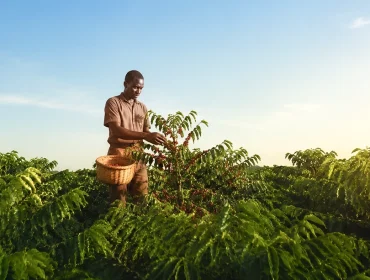
In recent years, specialty Arabica coffees from Uganda have also attracted growing interest. Smallholder farmers and local producers—by focusing on meticulous processing and quality control—have begun offering complex flavor profiles featuring chocolate, fruity, and caramel notes, admired in the specialty coffee sector.
The Future of Uganda in the Global Coffee Market
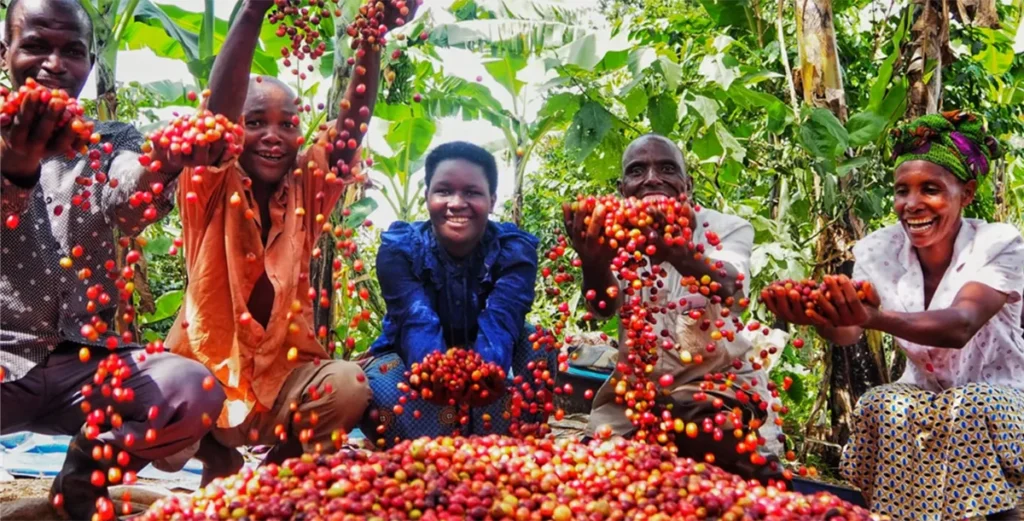
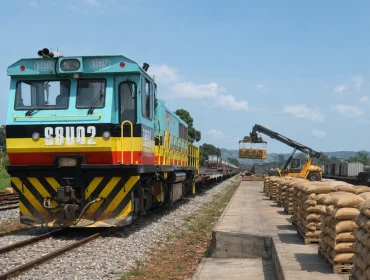
With rising global demand for coffee, especially in emerging Asian markets, Uganda has significant opportunities to expand its presence in international trade. Investments in domestic processing, quality improvements, and developing a strong Ugandan coffee brand can generate greater added value for the country.
If Uganda continues improving production systems, export logistics, and quality standards, it could become one of the world’s most influential coffee suppliers in the next decade. Many industry experts already believe that Uganda is on its way to becoming one of the fastest‑growing economies in terms of coffee exports, with an increasingly important role in the global supply chain.