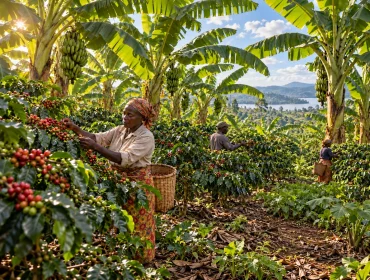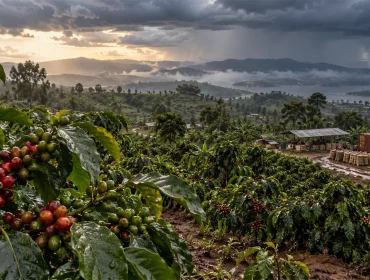


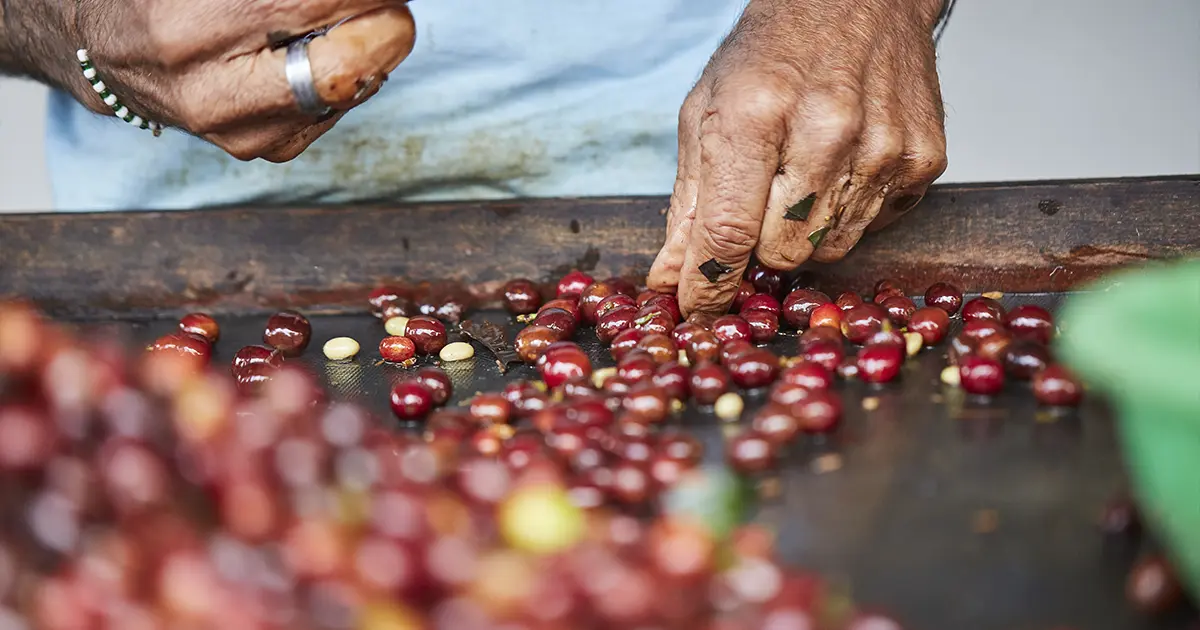
Uganda is one of the most important coffee‑producing countries in Africa, and a significant portion of its economy relies on the export of Arabica and Robusta coffee. The final quality of Ugandan coffee is directly influenced by the coffee processing methods used after harvesting. Understanding these methods is essential for companies involved in coffee importing, exporting, roasting, and trading.
In this article, we examine the most common coffee processing methods used in Uganda, their advantages, and how each method affects the final flavor profile of the coffee.
The Importance of Coffee Processing in Uganda
Coffee processing serves as the bridge between harvesting and export. In Uganda, where the climate varies widely—from the forests of Mount Elgon to the high elevations of the Rwenzori Mountains—the chosen processing method can significantly influence the quality of the final product.
Key reasons why processing is important in Uganda include:
- Improving sustainability and reducing post‑harvest losses
- Controlling flavor and aroma development
- Increasing the competitiveness of Ugandan coffee in specialty markets
- Creating added value for smallholder farmers
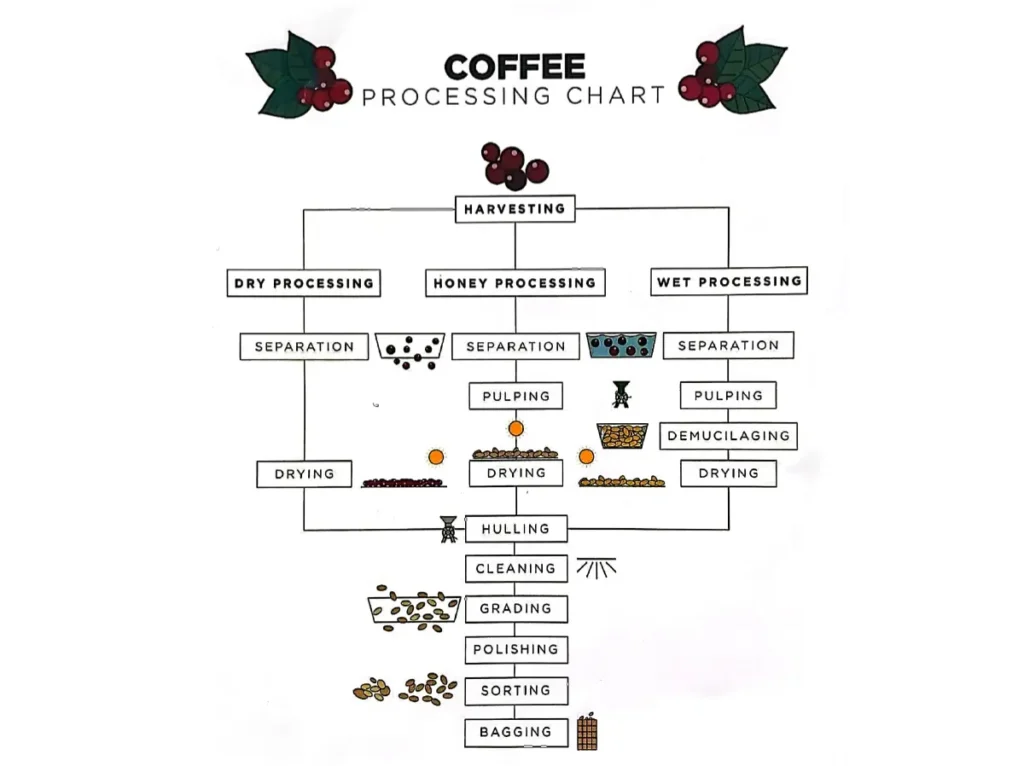
Main Coffee Processing Methods in Uganda
1. Natural Process (Dry Process)
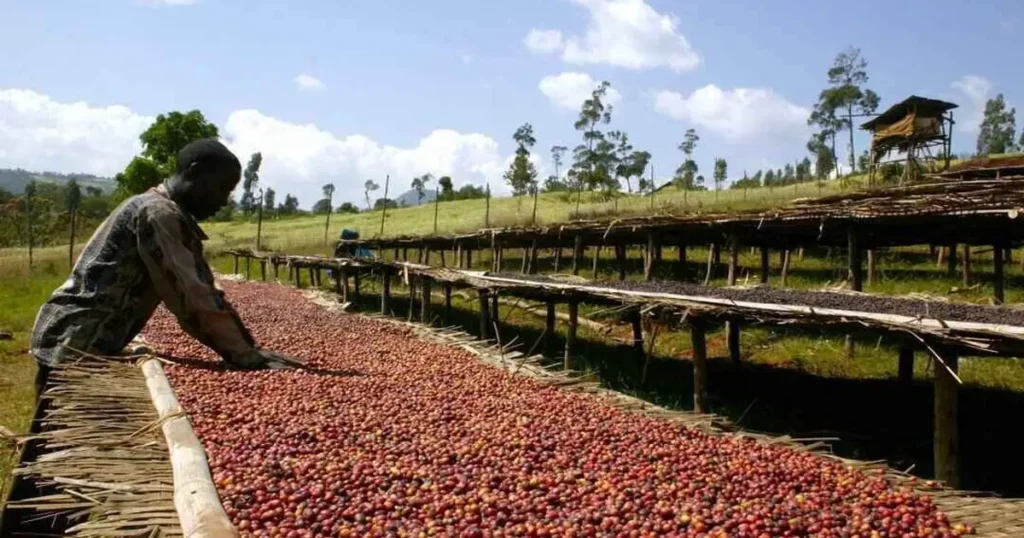
The natural process is the oldest and most widely used method in Robusta‑producing regions, particularly in central Uganda. In this method, coffee cherries are dried whole without removing the outer layers.
Processing Steps
- Harvesting ripe cherries and spreading them on drying beds
- Regular turning to prevent mold and ensure even drying
- Drying until the beans reach the appropriate moisture level
- Removing the dried husk to extract the green beans
Flavor Profile
High sweetness, fruity notes, and a heavy body.
Advantages
- Very low water consumption
- Suitable for warm climates and areas with limited infrastructure
- Produces distinctive flavor profiles attractive to specialty markets
2. Washed (Wet) Process

The washed process is the most common method for high‑altitude Arabica coffees in Uganda. It is known for producing clean and consistent flavor profiles.
Processing Steps
- Depulping the cherries using a mechanical pulper
- Controlled fermentation for 12–48 hours
- Washing to remove the mucilage layer
- Drying on raised drying beds
Flavor Profile
Bright acidity, clean cup profile, and floral or citrus notes.
Advantages
- Consistent and controllable quality
- Highly suitable for specialty coffee exports
- Produces clean and well‑defined flavor characteristics
3. Honey Process
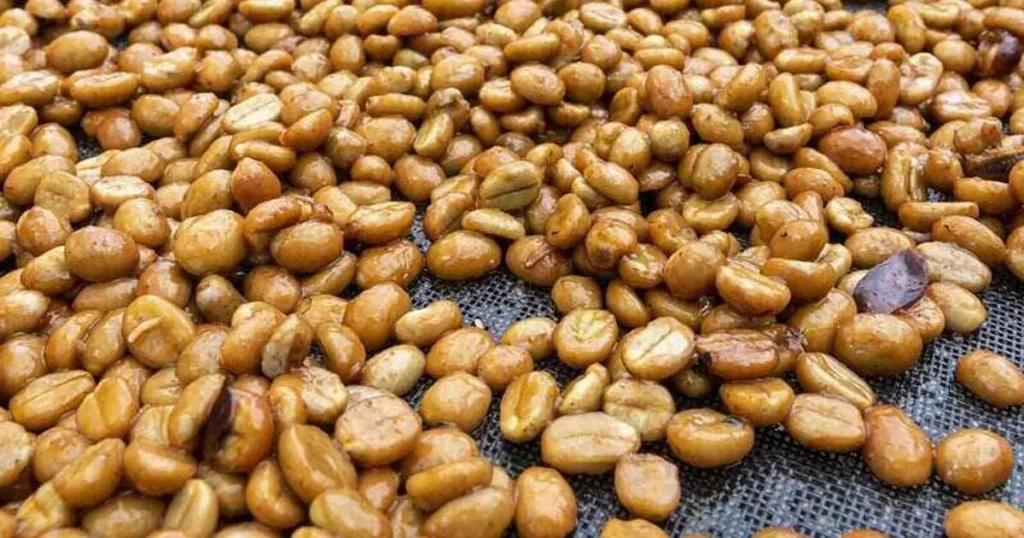
The honey process is an intermediate method between natural and washed processing. In recent years, it has gained popularity in some Arabica‑growing regions of Uganda.
Processing Steps
- Removing the outer skin of the cherry
- Leaving part of the mucilage attached to the bean
- Controlled drying on raised beds
Flavor Profile
High sweetness, medium to heavy body, and complex balanced flavors.
Advantages
- Lower water usage compared to washed processing
- Increasing demand in specialty coffee markets
- Combines desirable characteristics of both natural and washed processes
How Processing Methods Affect Coffee Quality
- Target market: Washed and honey processes are often preferred in specialty coffee markets.
- Coffee species: Robusta is commonly processed using natural methods, while Arabica is typically washed.
- Local conditions: Temperature, humidity, and water availability influence the choice of processing method.
Conclusion
With its combination of Robusta production and high‑altitude Arabica cultivation, Uganda offers a wide range of coffee processing methods. Understanding these methods helps coffee companies make more informed decisions in sourcing, importing, and trading Ugandan coffee.