

For international green coffee buyers, origin competitiveness is not determined only by cup quality, screen size, defect count, or FOB price. Logistics can materially affect landed cost, shipment predictability, inventory planning, and contract risk. That is why Uganda’s return to moving export coffee by rail deserves attention from importers, sourcing managers, traders, and direct-importing roasters.
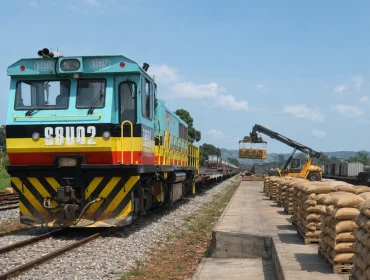
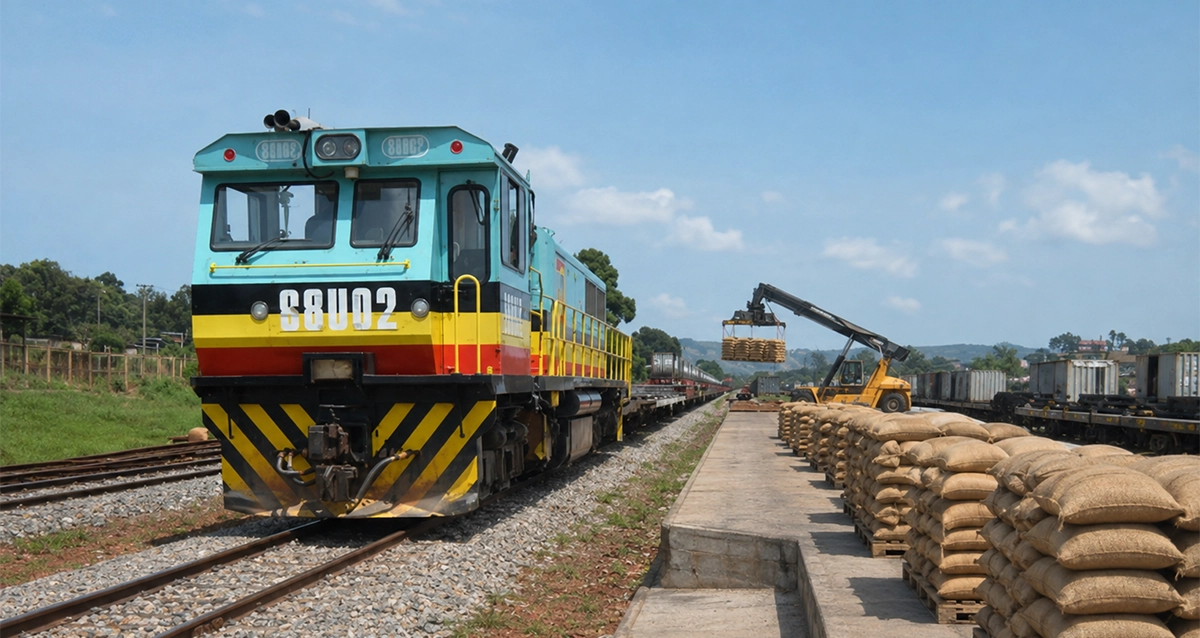
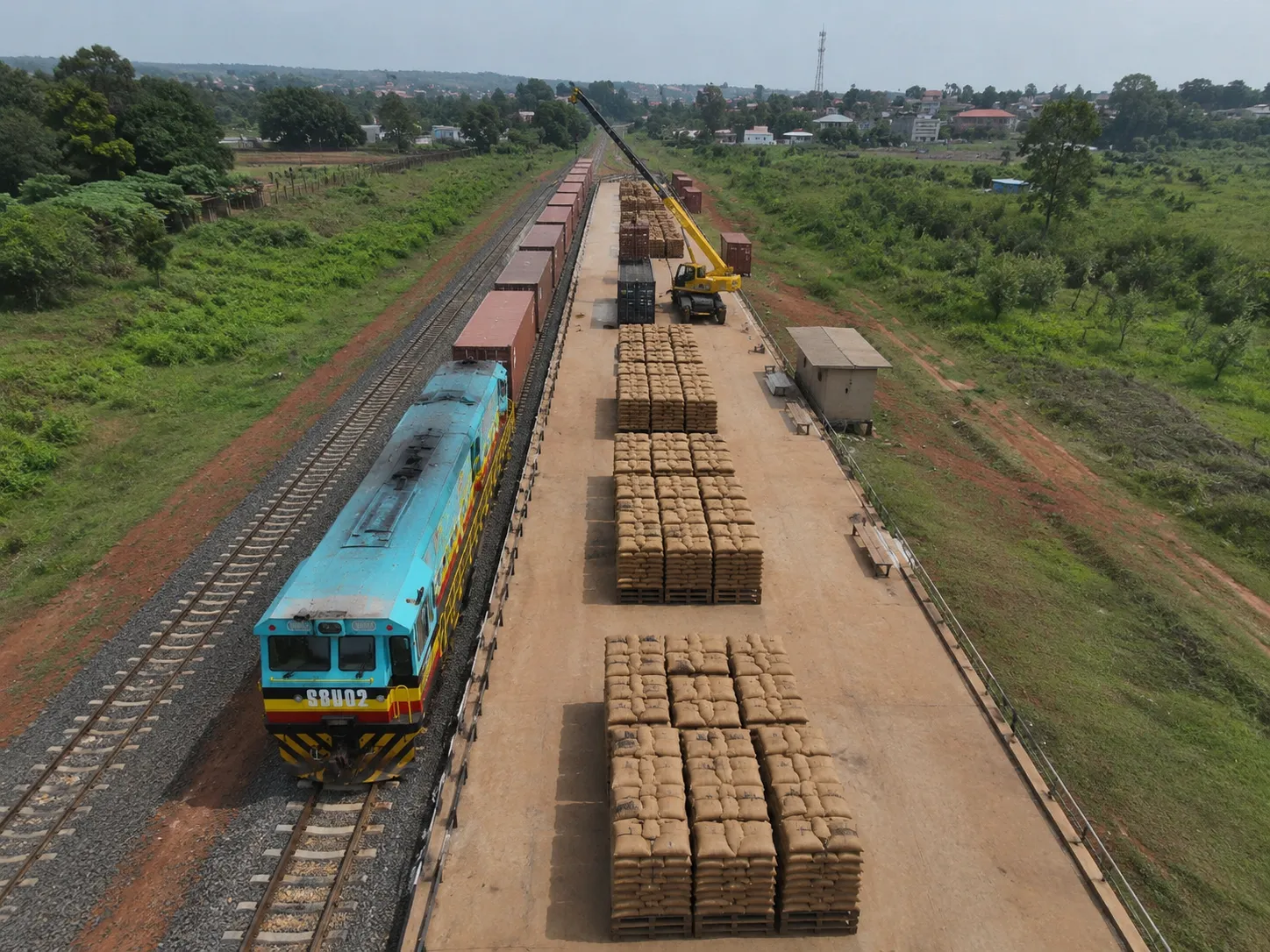
On July 28, 2026, Uganda Railways Corporation (URC) dispatched a block train carrying coffee from Kampala toward the Port of Mombasa. Daily Monitor reported that the shipment consisted of 29 containers—28 twenty-foot units and one forty-foot unit—with a total cargo weight of 606.6 tonnes. It was the first Ugandan coffee train to Mombasa in eight years. [1]
The event does not mean rail has replaced road transport. It does, however, reopen an important logistics option for a landlocked origin whose export competitiveness depends heavily on efficient access to regional ports.
A 606.6-Tonne Shipment That Reopened a Logistics Option
The shipment provides a useful commercial case study. Daily Monitor reported that the same cargo would have required roughly 17 heavy-duty trucks by road. At the road rates cited for that movement, the estimated trucking cost was about US$84,500. URC reportedly charged US$735 for each 20-foot container and US$990 for the 40-foot container, producing a rail freight total of about US$21,570. [1]
On those reported figures, the difference exceeded US$62,000 for one movement. [1][2]
These numbers should not be treated as a permanent benchmark. Freight rates vary by contract, fuel prices, handling, container availability, cargo weight, season, and service configuration. Still, the shipment shows the scale of savings that may be possible when rail is commercially competitive and operationally reliable.
Shipment Snapshot
| Metric | Reported figure |
| Dispatch date | July 28, 2026 |
| Cargo | Green coffee for export |
| Containers | 28 × 20ft + 1 × 40ft |
| Reported cargo weight | 606.6 tonnes |
| Road-equivalent estimate | Approx. 17 heavy-duty trucks |
| Reported rail freight | Approx. US$21,570 |
| Reported road estimate | Approx. US$84,500 |
| Reported difference | More than US$62,000 |
Why Rail Matters for a Landlocked Coffee Origin
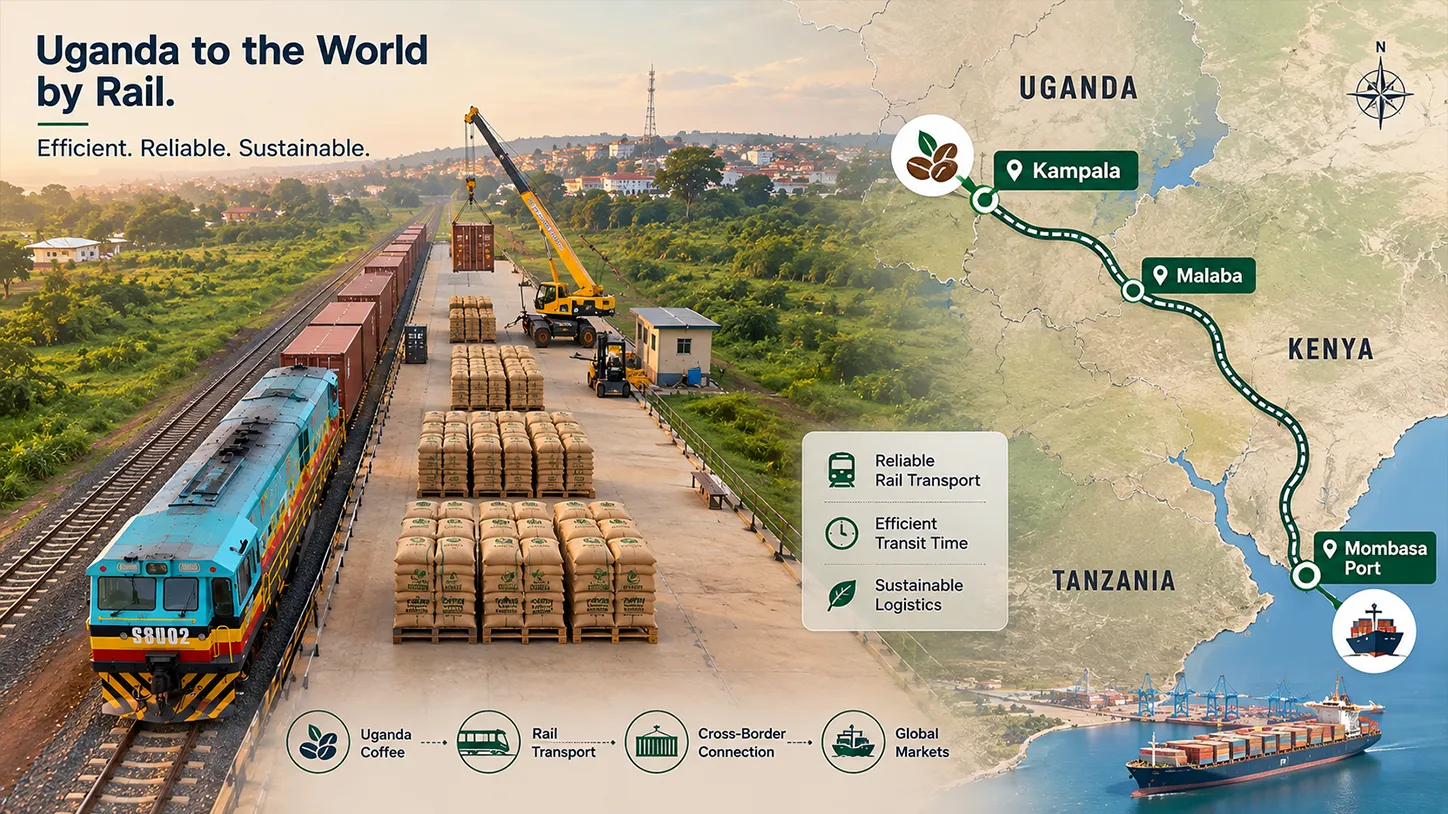
Uganda has no seaport, so international coffee cargo must travel overland before reaching an ocean gateway. URC lists the Northern Corridor between Kampala and Mombasa via Malaba as part of its freight network. [3]
For importers, this geography matters because inland transport is part of the supply chain before the ocean voyage starts. Higher inland freight can increase landed cost, while delays can affect vessel connections, documentation, financing periods, and stock availability.
Rail has structural advantages for large-volume commodities. A block train can consolidate many containers into one coordinated movement, reducing the number of individual truck journeys and potentially limiting exposure to road congestion, weighbridge delays, and truck availability.
For coffee traded in high-volume, margin-sensitive contracts, logistics improvements can become commercially meaningful when repeated across multiple containers.
What the Reported Cost Gap Actually Means
The reported saving is significant, but it needs the right interpretation.
A lower inland transport charge does not automatically create an identical reduction in the buyer’s final landed cost. The final economics depend on the Incoterm, terminal and handling charges, container detention, insurance, documentation, ocean freight, financing, and any transfer or storage costs created by the rail movement.
For an FOB buyer, inland efficiencies may be reflected indirectly through exporter competitiveness and offer structure. For CFR or CIF business, the allocation of logistics responsibilities is different and should be assessed within the complete quotation.
The key point is that rail creates another logistics lever. If exporters can choose between road and rail based on price, schedule, cargo size, and operating conditions, the origin may gain resilience as well as cost flexibility.
Potential Implications for Green Coffee Buyers
First, competitive rail freight could reduce inland logistics pressure. Uganda’s exporters must move cargo a considerable distance before it reaches Mombasa, so sustainable efficiency gains can improve export economics.
Second, rail can support larger consolidated shipments. Importers buying full-container loads or multi-container programs may benefit more than buyers of small lots from a system designed around block movements.
Third, an additional transport mode improves diversification. Road transport remains essential, but dependence on one mode creates exposure to congestion, fuel-price volatility, truck shortages, border delays, and route disruptions.
Fourth, reliable rail schedules could support better shipment planning. For importers, predictability is often as important as the lowest nominal freight rate. A cheaper route that misses a vessel connection may be more expensive in practice than a slightly higher-cost route that performs consistently.
Buyers should therefore watch frequency, transit time, terminal efficiency, cargo security, and service reliability—not just published tariffs.
Rail Is Promising, but Not Yet a Complete Solution
The return of coffee to rail is positive, but it does not mean Uganda’s inland logistics constraints have been solved.
Daily Monitor reported in August 2026 that only 269 kilometres of Uganda’s 1,266-kilometre metre-gauge railway network were operational. The same report said 10 of 46 locomotives were operational during the reviewed period and URC had 298 operational wagons against a target of 1,067. Financing, rolling stock, rehabilitation, and last-mile connectivity remain constraints. [2]
For exporters, the practical issue is repeatability. One successful train demonstrates capability; a dependable channel requires regular schedules, adequate equipment, coordinated border and port handling, and sufficient cargo volume.
International buyers should not assume every Ugandan shipment can immediately move by rail or that rail will always be the best option. Shipment planning should remain contract-specific.
Why This Matters as Uganda’s Coffee Exports Expand
The timing is significant. Uganda Broadcasting Corporation, citing the Ministry of Agriculture’s May 2026 coffee report, reported that Uganda exported 8.6 million 60-kilogram bags worth about US$2.3 billion during the 12 months ending May 2026. Robusta continued to represent the majority of monthly export volume. [4]
At this scale, logistics infrastructure becomes part of origin competitiveness. Improvements in processing and grading matter, but coffee must still move efficiently from warehouse to port.
For importers evaluating Uganda as a recurring Robusta or Arabica origin, the key question is not whether one shipment can be delivered. It is whether the supply chain can support repeat contracts with acceptable cost, timing, documentation, and quality preservation.
What Sourcing Managers Should Ask Suppliers
When evaluating a Ugandan green coffee offer, buyers should ask how the shipment is expected to move from warehouse to port and what assumptions are built into the quotation:
- Is inland movement planned by road, rail, or a combination?
- Which port and corridor will be used?
- What is the expected inland transit window?
- How is the coffee protected from moisture, contamination, and odour?
- At what point is the container sealed, and how is seal integrity controlled?
- Who bears delay, storage, detention, or route-change costs under the agreed Incoterm?
- Is there a contingency plan if the preferred transport mode is unavailable?
These questions help buyers distinguish a simple quotation from an executable supply plan.
The Obato Perspective: Logistics Is Part of Quality Assurance
Green coffee quality is created at farm and processing level, but it can be damaged after grading if storage and transport are poorly controlled. For a professional sourcing program, logistics should therefore be treated as part of quality assurance, not merely as an administrative step after sale.
Uganda’s rail revival broadens the country’s logistics toolkit. If service becomes regular, reliable, and commercially sustainable, it could strengthen Uganda’s ability to move larger export volumes efficiently through the Northern Corridor.
For international buyers, the practical response is to evaluate each offer using current freight conditions, realistic transit assumptions, clear Incoterms, and a supplier capable of coordinating quality, documentation, and shipment execution.
FAQ
- Does Uganda now export all green coffee by rail?
No. Road transport remains central to Uganda’s coffee export logistics. The July 2026 movement marked the return of coffee rail freight after an eight-year gap, but rail capacity and service frequency remain limited.
- Can rail transport reduce the landed cost of Ugandan green coffee?
Potentially, but not automatically. The July shipment showed a large reported difference between rail and road freight for that specific movement. Actual landed cost still depends on the Incoterm, handling, ocean freight, insurance, financing, and other logistics charges.
- Why should green coffee importers monitor Uganda’s railway development?
Because inland logistics affects price competitiveness, shipment reliability, risk diversification, and the scalability of long-term sourcing programs. If rail becomes dependable, it could strengthen Uganda’s position as a commercial coffee origin.
Conclusion
Uganda’s return to transporting coffee by rail is more than a transport headline. It is an early indicator of how infrastructure investment could influence the competitiveness of one of Africa’s important coffee origins.
The July 2026 movement proved that a large coffee consignment can again travel from Kampala toward Mombasa by rail, with significant reported freight savings. The next test is consistency: regular service, sufficient rolling stock, reliable schedules, efficient port connections, and transparent costs.
For green coffee importers, these details matter because a strong sourcing program depends on more than the bean itself. Quality, price, documentation, logistics, and execution must work together.