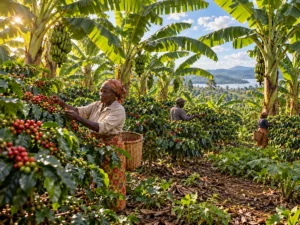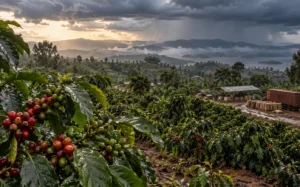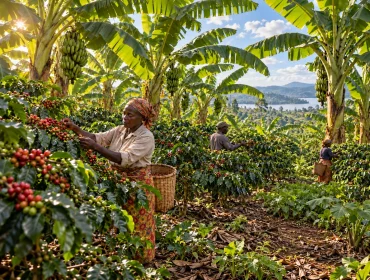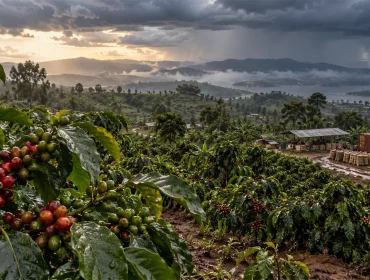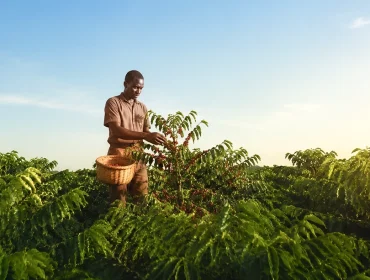


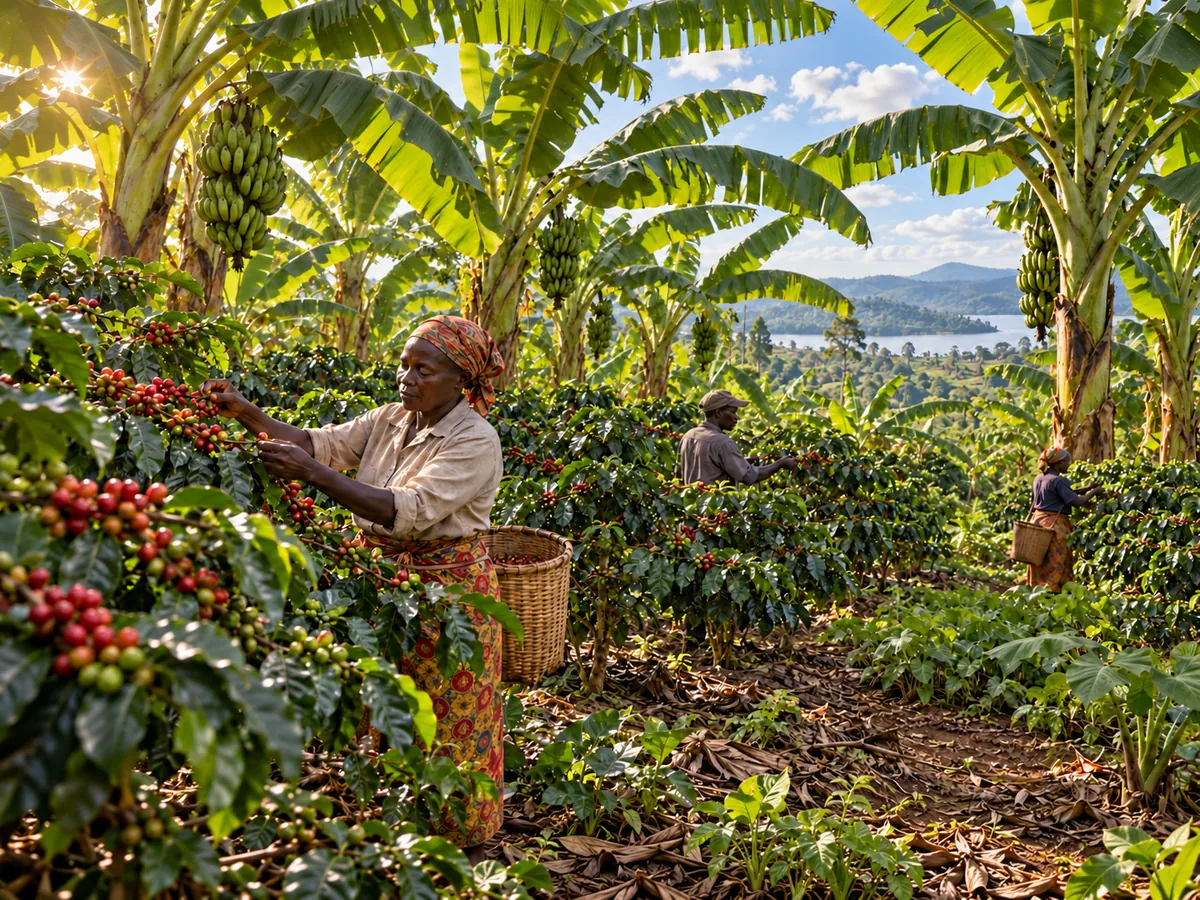
Shade-grown Robusta coffee in Uganda is not simply a marketing description; it refers to an agroforestry approach in which coffee grows within a managed system of shade trees, food crops or other perennial vegetation. Uganda has a long history of coffee agroforestry, and a 2025 review from the National Agricultural Research Organisation (NARO) describes Robusta production as historically associated with agroforestry methods. For B2B buyers, the important point is not whether a farm has trees, but how the shade system is designed and managed – because shade can influence heat exposure, soil moisture, yield stability, pest pressure and the commercial consistency of the crop.
What Does Shade-Grown Robusta Mean in Uganda?
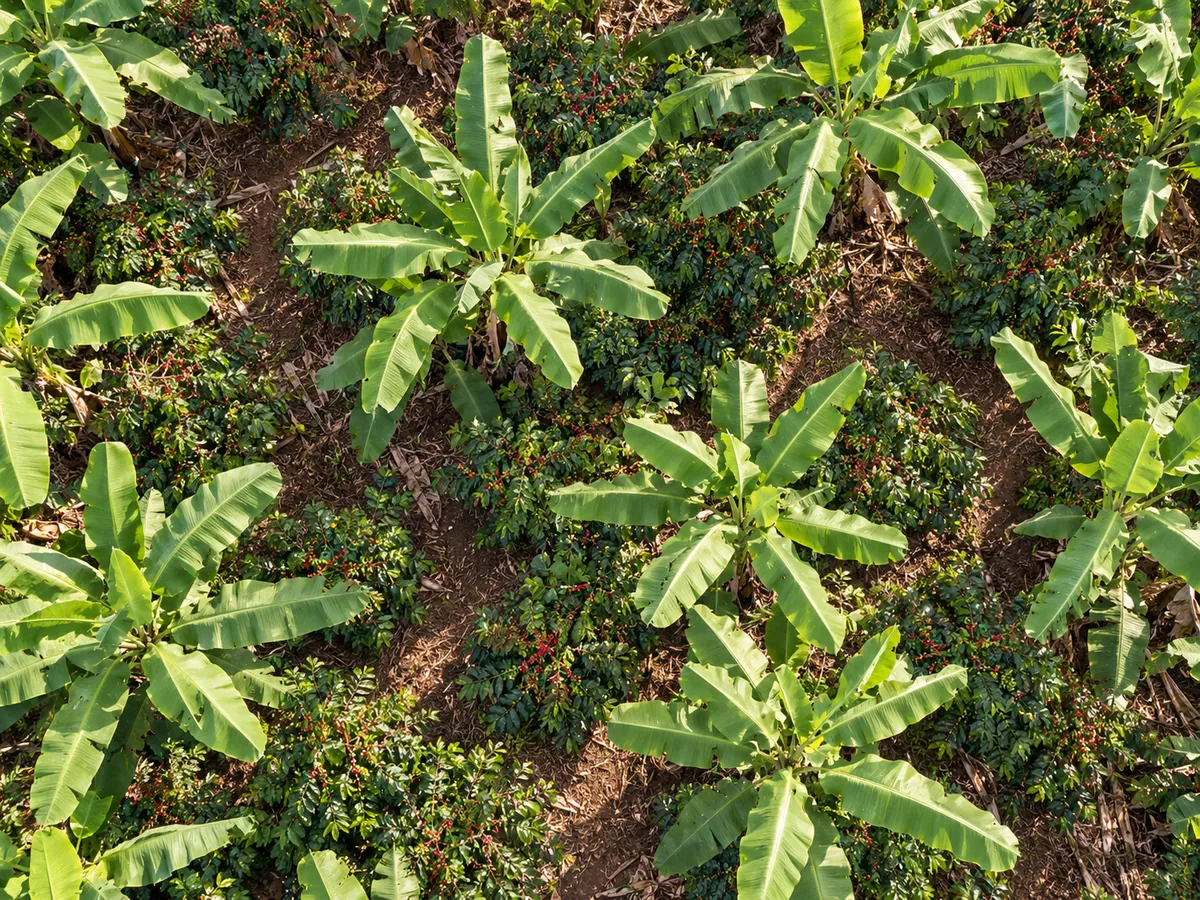
Uganda’s coffee systems can combine Robusta with permanent shade trees, bananas and other useful species. The official Uganda coffee regulatory agriculture handbook recommends selecting shade trees with a relatively even canopy, deep roots, wind resistance and good adaptation to local conditions. It also says shade trees should ideally tolerate pruning and should not act as hosts for important coffee pests and diseases.
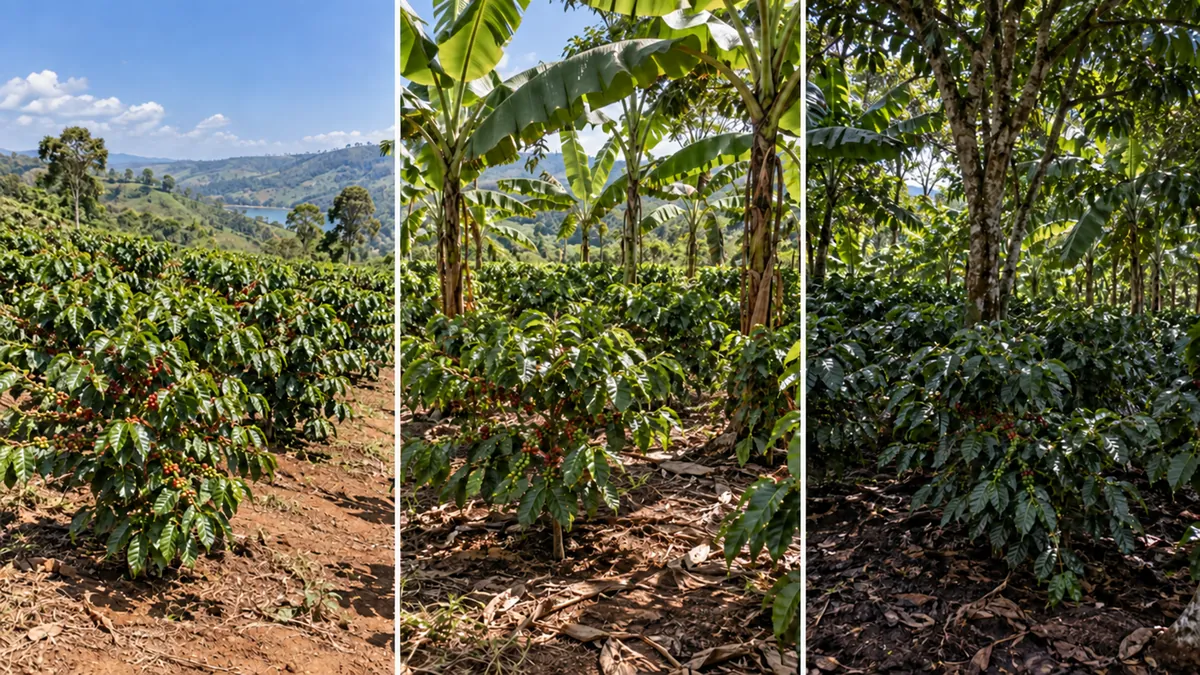
The same handbook recommends shade-tree systems that intercept around 20-40% of total light on the plantation and notes that Arabica generally requires denser shade than Robusta. That is an important distinction: shade-grown does not mean placing coffee under a closed forest canopy. In a commercial coffee system, shade is a managed agronomic variable.
Species choice also matters. Uganda guidance lists trees such as Albizia, Grevillea, Leucaena and Calliandra for different functions, while research on climate adaptation in Uganda has examined Ficus natalensis and Cordia africana as commonly used agroforestry trees. The useful tree is therefore not simply the one that creates the most shade; it must fit the farm’s rainfall, soil, altitude, pruning system and production objectives.
Why Shade Is Becoming More Relevant Under Climate Change
The climate argument for agroforestry is becoming more specific. A 2026 Agroforestry Systems study modelled Robusta suitability in Uganda and simulated an agroforestry microclimate that reduced maximum temperature by 3 °C and increased minimum temperature by 1 °C. Under the higher-warming SSP5-8.5 scenario, areas classified as very low suitability expanded sharply without agroforestry. The model estimated a relative buffering effect of 38.2% under SSP2-4.5 and 17.2% under SSP5-8.5.
These are modelling results, not a guarantee that every shaded farm will achieve the same protection. In fact, the study concluded that precipitation and soil conditions remain major constraints and that shade should be combined with water and soil management. This is commercially important: agroforestry can reduce exposure to thermal stress, but it cannot compensate for every climate or agronomic limitation.
A separate 2024 Uganda study reached a similar conclusion. It projected that climate change could reduce the area suitable for Robusta by roughly 5% under a moderate scenario and 9% under a higher-emissions scenario by 2050. In its modelling, 25% and 50% shading partially buffered projected suitability losses, but the benefit varied by region. The authors specifically warned that agroforestry recommendations need to reflect elevation, rainfall, temperature and water availability rather than applying one design across the country.
The Yield Trade-Off: More Shade Is Not Always Better
The strongest mistake in discussing shade-grown coffee is to assume that more shade automatically creates a better production system. Ugandan field research at Mt. Elgon found that coffee yield components declined when shade cover rose above about 30%, while coffee intercropped with banana produced higher yield per hectare than the open-coffee and shade-tree systems in that study. Because this work covered specific coffee systems and environments, the 30% figure should not be treated as a universal Robusta rule. It does, however, show the importance of avoiding unmanaged, excessive shade.
Another Mt. Elgon study found that shade buffered maximum temperature by about 3 °C and reduced temperature amplitude, while intermediate shade – similar to the coffee-banana systems observed there – provided a useful balance between microclimate regulation and crop development. The practical message is that shade management is an optimisation problem: enough canopy to moderate heat and moisture stress, but enough light and resource availability to sustain productive coffee.
Shade Trees Also Change the Farm Economics
Agroforestry can produce value beyond coffee. A NARO study of shaded Robusta systems in central Uganda found that shade-tree products – including fruit, fuelwood and timber – made a substantial contribution to household income in the systems studied. That does not directly change the physical specification of a green-coffee lot, but it can diversify farm income and potentially reduce dependence on coffee as the farmer’s only source of value.
For buyers interested in supply resilience, this matters. A farm system that produces several useful outputs may have different incentives for maintaining trees, soil cover and long-term productivity than a simplified monoculture. However, economic benefits depend on tree species, labour, stocking density, markets and farm management, so agroforestry should not be presented as automatically more profitable in every case.
Does Shade-Grown Robusta Automatically Mean Better Quality?
No. Shade is an agronomic condition, not a quality grade. A meta-analysis covering 30 peer-reviewed studies found that shade trees generally produced positive effects across several Robusta growth, physiological and microclimatic variables, but beverage-quality results were uneven and depended on location, rainfall, clone, shade level and other interacting factors. The same review cautioned against intense shade because some studies found negative effects on cup quality at higher shade levels.
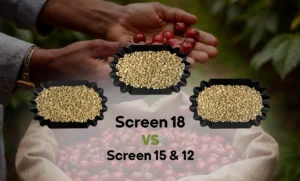
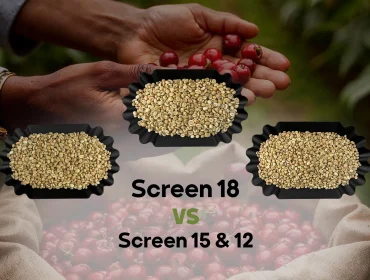
For an importer, the implication is straightforward: a “shade-grown” claim should never replace lot-level quality control. Buyers still need moisture, defects, screen distribution, processing information, crop timing, representative samples and cup evaluation. Shade management may contribute to resilience and crop development, but it does not remove the need to evaluate the actual coffee being contracted.
What B2B Green Coffee Buyers Should Ask
| Buyer question / variable | Why it matters for buyers |
|---|---|
| What does “shade-grown” mean on this farm? | Clarify whether coffee is grown with permanent trees, bananas, mixed agroforestry or simply scattered canopy. The commercial term is not a standardized quality grade. |
| How much shade is maintained? | Shade intensity influences light, temperature, moisture and yield. A percentage should be interpreted together with the measurement method and local conditions. |
| Which tree species are used? | Tree architecture, rooting depth, pest interactions, pruning and secondary products can change the performance of the coffee system. |
| How are water and soil managed? | Recent Uganda modelling shows that agroforestry cannot replace good water and soil management under climate stress. |
| How does the lot perform physically and in the cup? | Procurement decisions should remain based on representative samples, specifications and sensory performance – not the farming label alone. |
For B2B sourcing, the most useful way to interpret shade-grown Robusta is therefore as a farm-management attribute that can provide context about resilience, rather than as a standalone promise of superior quality. When suppliers can describe their shade design, tree species, farm conditions and quality-control system clearly, buyers gain a more complete picture of how the coffee was produced and how the supply base may respond to climate stress.
What the Evidence Supports – and What It Does Not
The evidence supports a measured conclusion. Well-designed agroforestry can moderate coffee microclimate, diversify farm outputs and partially buffer some climate-related losses in Robusta suitability. Uganda’s own guidance treats shade as a managed part of coffee agronomy rather than an unlimited input. Recent research also shows that the effectiveness of shade changes with warming intensity, rainfall, soils and geography.
The evidence does not support a blanket claim that every shaded Robusta farm will yield more coffee, produce a better cup or remain protected under severe climate change. For buyers, the stronger sourcing question is not “Is this coffee shade-grown?” but “How is shade managed, and what does the actual lot show in its physical and sensory results?”
FAQ
1. Is shade-grown Robusta always higher quality than sun-grown Robusta?
No. Research shows that shade can improve microclimate and some plant-performance variables, but cup-quality effects are inconsistent and depend on shade intensity, location, rainfall, clone, processing and other factors. Buyers should evaluate the actual lot rather than using shade alone as a quality indicator.
2. What is the right amount of shade for Robusta in Uganda?
There is no single percentage that fits every farm. Uganda’s official coffee handbook recommends shade-tree systems that intercept about 20-40% of total light, while field research shows that excessive canopy can reduce yield components in some environments. The appropriate design depends on climate, water, altitude, tree species and farm management.
3. Why should green coffee importers care about agroforestry?
Because agroforestry can affect production risk, heat exposure, soil and water conditions, farm economics and potentially long-term supply resilience. It is useful sourcing context, but it should be assessed alongside the normal commercial specifications for each green-coffee lot.
Conclusion
Shade-grown Robusta coffee in Uganda offers a credible example of how traditional agroforestry can intersect with modern climate-risk management. The most promising systems are not necessarily the ones with the greatest tree cover; they are the systems in which shade intensity, tree species, water, soil and coffee management are balanced for local conditions.
For professional buyers, this creates a more useful sourcing conversation. Ask how the farm is managed, then verify the coffee itself through physical specifications, samples and cup performance. Agroforestry can strengthen the resilience story behind Ugandan Robusta, but commercial quality still has to be demonstrated lot by lot.