

A Common Language in the Coffee Trade
International green coffee trading can turn into a huge gamble without a common language. Importers constantly face the challenge: does the product delivered in the container have the exact quality they paid for? This is where the Specialty Coffee Association (SCA) comes into play.
Understanding SCA standards is not just an advantage for an importer; it is an absolute necessity for protecting capital and reputation. At Obato Company, as an exporter of green coffee, we firmly believe that the buyer’s awareness is the foundation of a win-win business. In this article, we examine why these standards matter, with a special focus on two crucial elements: sampling and defect grading.
What are SCA Standards and Why Do They Matter to Importers?
The Specialty Coffee Association (SCA) has developed precise protocols for the physical and sensory evaluation of coffee. For an importer, knowing these protocols means:
- Preventing financial loss: Avoiding loads with hidden drops in quality.
- Transparency in contracts: The ability to refer to international standards in the event of a dispute with the supplier.
- Quality assurance for roasteries: Delivering a high-quality, consistent product to end customers (roasters).
The Beating Heart of Green Coffee Evaluation: Sampling
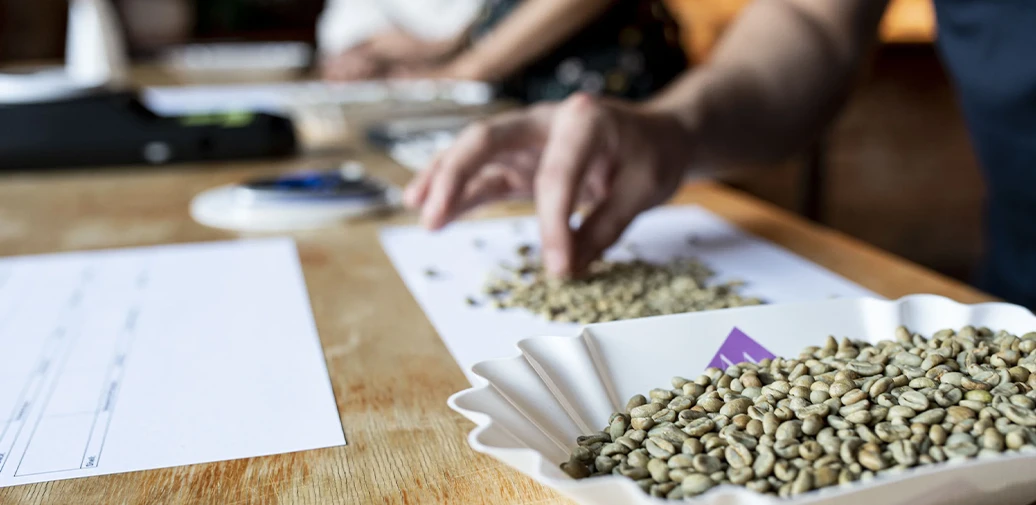
One of the most important parts of the SCA standard that importers must thoroughly understand is proper sampling. You cannot inspect every single bag in a container bean by bean; therefore, the sample you receive must be a true representative of the entire load.
What is the Standard Sampling Procedure?
According to standard guidelines, sampling must not be done from just one bag or only from the surface of the load.
- Sample Distribution: For both commercial and specialty loads, a specific tool (a trier) must be used to draw samples from various bags across different locations within the container.
- Sample Volume: For physical evaluation according to SCA standards, a minimum of 350 grams of a representative sample of green coffee is required.
- Sample Storage Conditions: Samples must be kept in sealed bags with exact details recorded (date, lot number, origin, etc.) so that their moisture content does not fluctuate.
Importance for the Importer: If your supplier conducts random and non-standard sampling (e.g., sending a sample drawn only from the best bags), you will face a disastrous drop in quality upon delivery at customs.
Defect Grading: A Magnifying Glass on Green Beans
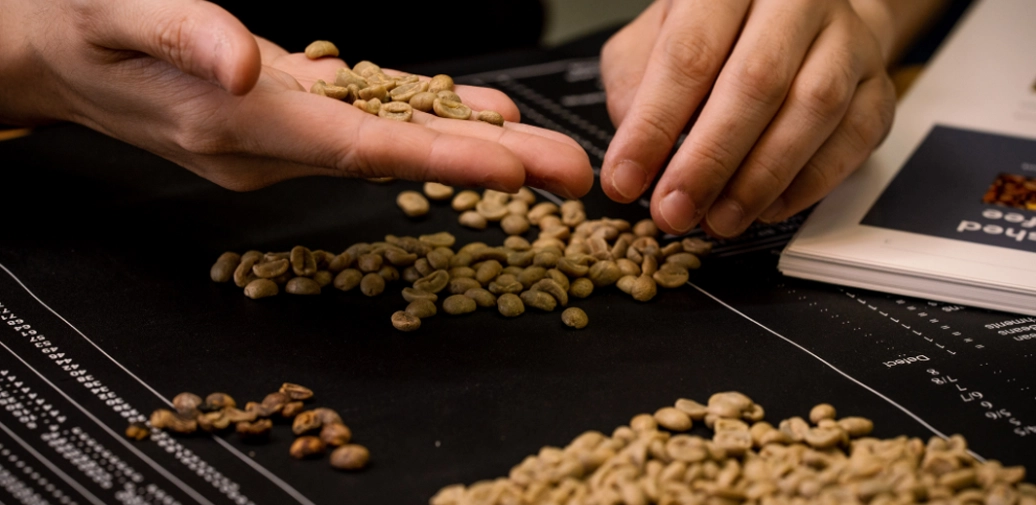
After proper sampling, it is time for physical evaluation and identifying defects. Defect grading is the most critical factor in determining the coffee grade (Specialty, Premium, or Commercial). Under the SCA standard, defects in a 350-gram green coffee sample are divided into two main categories:
1. Primary Defects
These defects have a severely destructive impact on the final cup.
- Examples: Full Black, Full Sour, severe insect damage, and large foreign matter (such as stones or wood).
- The SCA Golden Rule: For a coffee to be classified as “Specialty,” it must have zero primary defects.
2. Secondary Defects
These defects have less impact, but an excessive amount of them lowers the quality of the batch.
- Examples: Broken beans, slight insect damage, Quakers, and beans in parchment.
- The SCA Golden Rule: For specialty coffee, a maximum of 5 full secondary defects is allowed in 350 grams.
Key Point for Importers: Defect calculation is based on “equivalents” (e.g., 5 broken beans equal 1 full secondary defect). Mastering these equivalents helps you know the true value of the load you are purchasing, saving you from incurring additional costs for re-sorting.
Other Important Physical Factors in the SCA Standard
In addition to defect grading and sampling, a professional importer must also check the following items on the evaluation form:
- Moisture Content: According to the SCA standard, the moisture of dried green coffee should be between 10% and 12% (this may vary slightly for specific processing methods). High moisture increases the risk of mold during ocean transit.
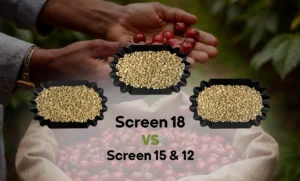
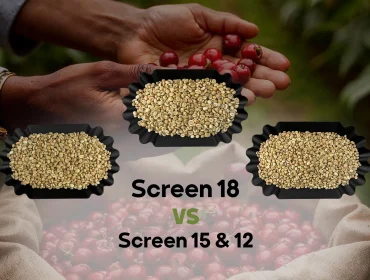
- Screen Size: The uniformity of bean size is absolutely crucial for an even roast.
Conclusion: Safe Trading with Reliable Suppliers
Importing green coffee is a high-risk business, but mastering SCA standards minimizes this risk. When you speak the language of defects and standard sampling methods, you know exactly what to demand.
At Obato Company, relying on years of experience in sourcing and exporting green coffee, we perform all stages of sorting, sampling, and defect grading strictly and exactly in accordance with international SCA standards. Our goal is for importers to receive a consistent, transparent, and top-quality load at their destination.
For consultation on sourcing and importing standard green coffee, contact Obato’s experts today.