

Uganda has long been recognized as one of Africa’s leading coffee-producing countries, supplying a significant share of the Robusta coffee traded in international markets. However, examining total export volumes alone does not provide a complete picture of developments within the country’s coffee sector. The composition of export grades can also offer valuable insights into production trends, quality improvements, and changing market demand for Screen 18 Coffee.
According to export grade data published by the Uganda Coffee Development Authority, one of the most notable developments in recent years has been the substantial growth in the share of Screen 18 beans within Uganda’s coffee exports. This trend may reflect positive changes in production practices, processing capabilities, and the commercial positioning of Ugandan coffee in global markets.
What Does Screen Size Mean in Coffee Grading?
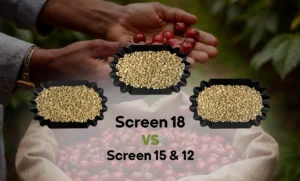
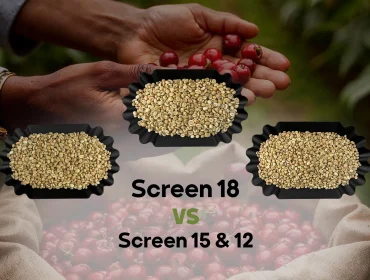
Bean size is one of the standard parameters used in green coffee grading and international coffee trade. In this system, coffee beans are separated using standardized screens and classified according to their diameter.
Screen 18 is among the larger bean sizes commonly traded in commercial coffee markets. Larger beans are often associated with better cherry development and more complete bean formation. Their greater uniformity also makes them attractive to many roasters and coffee buyers.
It is important to note that bean size alone does not determine cup quality. Nevertheless, it remains one of the most important commercial specifications used in the buying and selling of green coffee.
Strong Growth in Screen 18 Exports
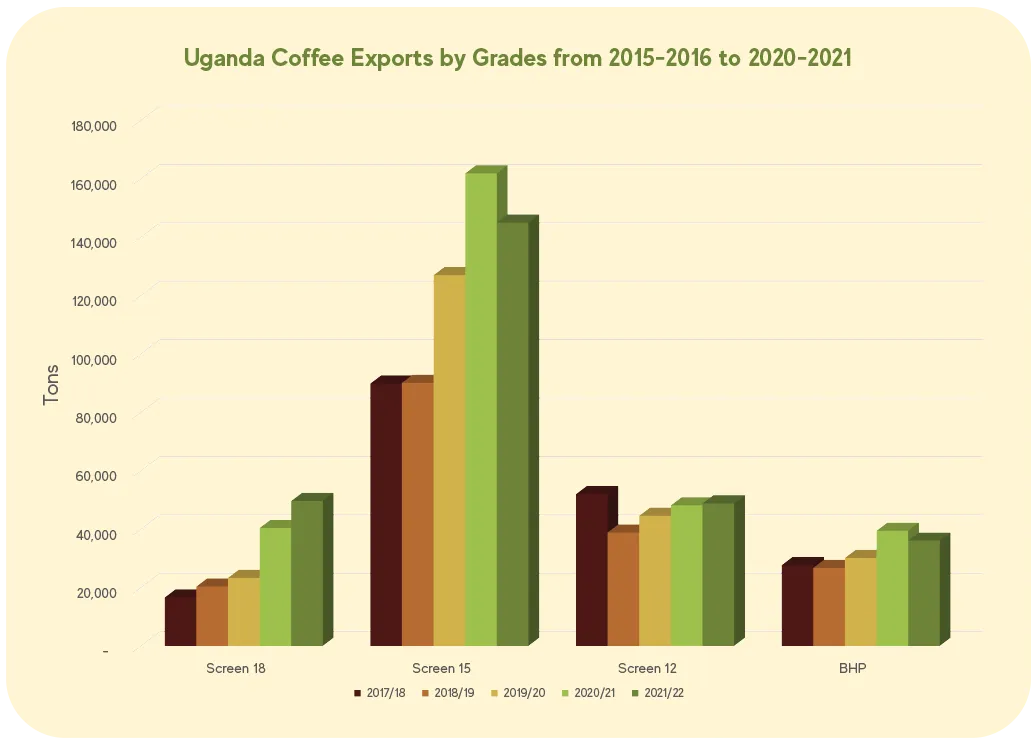
UCDA data shows that Screen 18 exports experienced significant growth during the period under review.
Export volumes increased from approximately 16,594 tonnes in the 2017/18 coffee year to more than 49,652 tonnes in 2021/22.
In other words, Screen 18 exports nearly tripled during this period. Such growth is particularly noteworthy among Uganda’s major export grades and suggests that larger beans are accounting for an increasingly important share of the country’s export portfolio.
Screen 15 Remains the Dominant Export Grade
Despite the rapid growth of Screen 18, Screen 15 continues to represent the largest portion of Uganda’s coffee exports.
Export volumes for this grade ranged from approximately 89,867 tonnes to 161,839 tonnes during the period analyzed. In the 2020/21 coffee year, Screen 15 exports exceeded 161,000 tonnes, highlighting its central role in Uganda’s coffee export sector.
For importers seeking reliable supply and large commercial volumes, Screen 15 remains the cornerstone of Uganda’s export offering. However, the faster growth rate of Screen 18 indicates that the country’s export profile is gradually evolving.
What Does the Growth of Screen 18 Suggest?
The increasing share of Screen 18 beans may be driven by several factors.
Improved agricultural practices are one possible explanation. Better farm management, enhanced tree nutrition, and favorable growing conditions can contribute to the production of larger coffee beans.
Advances in processing and sorting technology may also play a role. Improved grading and separation systems allow exporters to identify and market larger beans more effectively.
Market demand is another important factor. Many international buyers prefer more uniform bean sizes because they can contribute to greater consistency during roasting and quality control processes.
As a result, the growth of Screen 18 exports likely reflects a combination of improvements at origin and evolving preferences among global coffee buyers.
Why Does This Matter for Importers?
For coffee importers and roasters, the increasing availability of Screen 18 beans means greater access to larger and more uniform coffee lots from Uganda.
The growing supply of this grade can provide additional sourcing options for buyers seeking specific technical characteristics or higher consistency within their shipments. It also demonstrates Uganda’s increasing ability to meet a broader range of international market requirements.
Alongside the established position of Screen 15, the continued growth of Screen 18 may create new opportunities for importers looking to diversify their sourcing portfolios.
Conclusion
Data published by the Uganda Coffee Development Authority shows that Screen 18 has become one of the fastest-growing grades within Uganda’s coffee export sector. Export volumes increased from approximately 16,594 tonnes in 2017/18 to more than 49,652 tonnes in 2021/22, representing growth of nearly 200 percent.
Although Screen 15 continues to account for the largest share of Uganda’s coffee exports, the rapid expansion of Screen 18 highlights a significant shift in the country’s export grade composition. For green coffee importers, this trend may signal greater availability of larger beans, continued improvements in processing capabilities, and the ongoing development of Uganda’s coffee industry.